
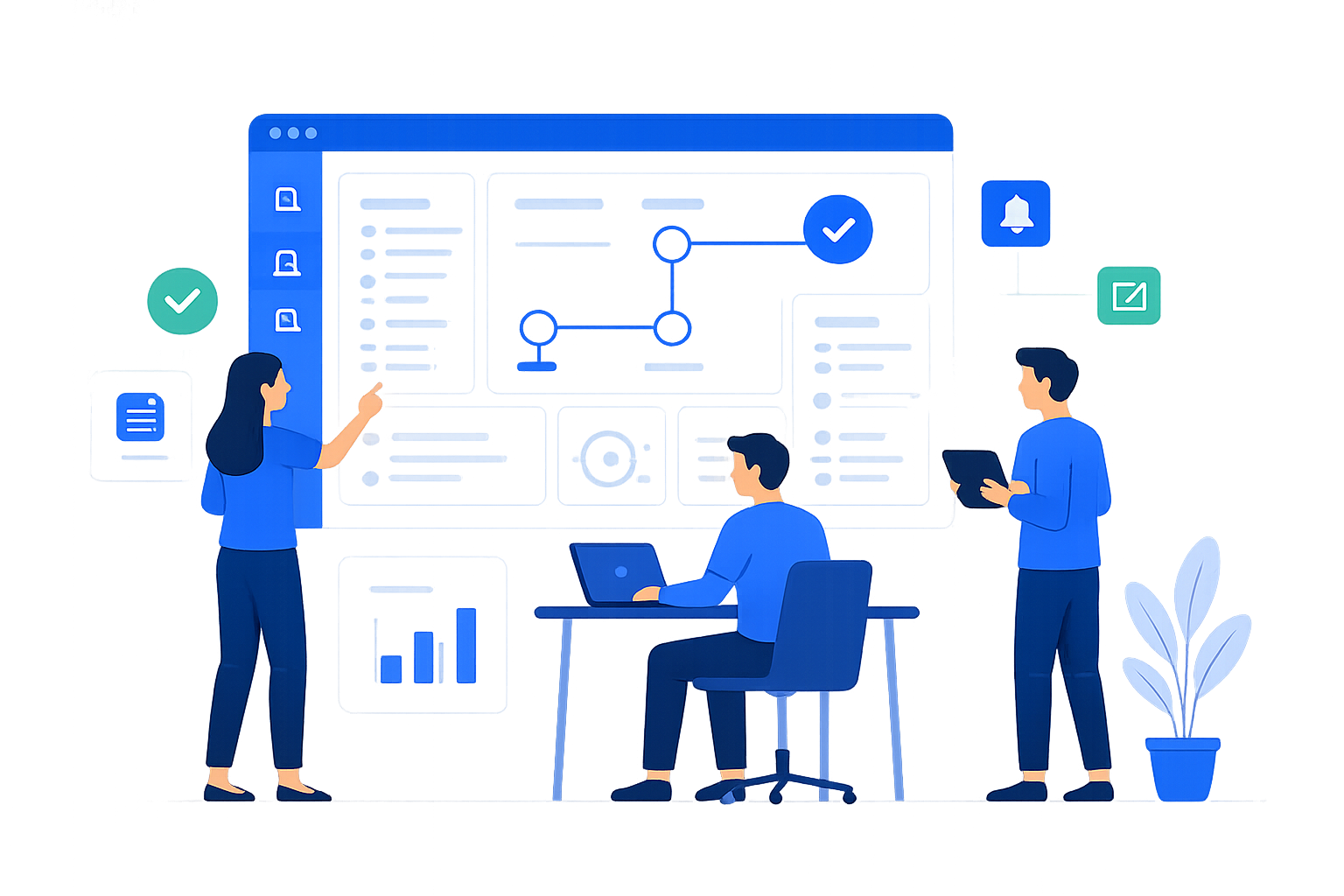
As organizations expand, business operations naturally become more complex. New teams are formed, projects increase, approval processes multiply, and information begins flowing across different departments. Without a structured way to manage these activities, maintaining visibility and consistency becomes increasingly difficult.
Many businesses rely on separate applications for different operational needs. While each tool may solve a specific problem, managing work across multiple systems often creates unnecessary complexity. A more connected approach helps organizations organize work, improve collaboration, and maintain greater control over daily business activities.
Why Operational Complexity Increases as Businesses Grow
Growth introduces new responsibilities, additional employees, and more business processes. Activities that were once easy to manage through emails or spreadsheets gradually become harder to coordinate.
Common operational changes include:
- Larger project teams
- Multiple approval levels
- Increased customer requests
- More internal collaboration
- Higher documentation requirements
- Growing administrative responsibilities
Without structured processes, these changes can reduce productivity and make it difficult to maintain operational consistency.
Signs Your Business Has Outgrown Multiple Tools
Using different software applications for separate business functions often works during the early stages of growth. Over time, however, organizations may begin to notice operational challenges that affect efficiency.
Common signs include:
- Employees searching for information across different systems
- Repeated manual data entry
- Delayed approvals
- Difficulty tracking project progress
- Duplicate business records
- Inconsistent reporting
- Limited visibility into ongoing work
These issues often indicate that existing processes have become difficult to manage efficiently.
Creating a Connected Work Environment
A connected work environment allows teams to manage business activities through one organized workspace where information remains accessible and consistent.
Instead of depending on disconnected systems, employees can collaborate using standardized processes that improve communication, reduce manual coordination, and support better decision-making.
This approach creates greater transparency across departments while making everyday work easier to manage.
Business Activities That Can Be Managed Together
A modern business management solution can support a wide range of operational activities within a centralized environment.
These activities typically include:
- Task management
- Project coordination
- Workflow execution
- Approval management
- Employee work tracking
- Document organization
- Customer activity management
- Team collaboration
- Business reporting
- Performance monitoring
Managing related activities together helps improve coordination and reduces the effort required to switch between multiple systems.
Business Benefits Beyond Productivity
The value of a connected operational environment extends beyond saving time. It also helps organizations improve consistency, accountability, and long-term business performance.
Better Decision-Making
Centralized business information enables managers to make informed decisions using accurate and up-to-date operational data.
Improved Accountability
Clearly assigned responsibilities help employees understand ownership while allowing managers to monitor progress more effectively.
Consistent Process Execution
Standardized procedures reduce variations in how recurring business activities are completed across different departments.
Easier Employee Onboarding
New employees can become productive more quickly when business processes follow a consistent structure.
Better Customer Experience
Well-organized internal operations contribute to faster response times, improved service quality, and more reliable customer interactions.
When Should Businesses Consider Consolidating Their Systems?
Organizations often begin evaluating a more connected operational approach when managing work across multiple applications becomes increasingly difficult.
Typical situations include:
- Rapid business growth
- Expanding departments
- Increasing project volume
- Frequent approval workflows
- Difficulty generating reports
- Growing operational complexity
Consolidating business activities into a single environment can help simplify operations while improving visibility and coordination.
Best Practices Before Moving to a Connected System
Adopting a new operational approach should begin with careful planning rather than simply replacing existing software.
A successful transition typically involves:
- Reviewing current business processes.
- Identifying repetitive or manual activities.
- Removing duplicate workflows where possible.
- Defining clear ownership and responsibilities.
- Training employees on standardized processes.
- Monitoring adoption and continuously improving operations.
A phased implementation strategy often helps organizations achieve smoother adoption with minimal disruption.
Conclusion
Managing business operations effectively requires more than simply using digital tools—it requires a structured approach that keeps people, processes, and information connected.
As organizations continue to grow, maintaining operational visibility, improving collaboration, and establishing consistent processes become increasingly important. A connected business environment helps reduce complexity, supports informed decision-making, and creates a strong operational foundation for sustainable long-term growth.
0 Comments